
Minority Report Apparently I'm the minority reporter The dissenting opinion. (Thanks Dr. Case)
Sunday, December 6, 2015
As the Crow Flies
This week we heard from the group that read the the Wendell Berry novel Jayber Crow which seemed to be about a man who was trying to find himself. Jayber wasn't satisfied with his life in Port William and decided to leave and become a preacher but then he decided that he didn't want to be a pastor and dropped out. Jayber goes on floating through life in this manner for the rest of his life. I understand Jayber's want to find where he belongs but it seems irresponsible to just up and leave when you feel that you are done in a certain area. I haven't read the book so I don't know if he had anyone relying on him in those towns or anything like that but it seems selfish to leave whenever you feel like it. Somewhere there is probably some context to his choices but to me it seems that he isn't really thinking of anyone other than himself. It seems to me that Jayber doesn't necessarily believe that he HAS to live where he was originally from but his idea of place is simply wherever he happens to find himself at a given time. His sense of place isn't based on where he's from but rather where he is supposed to be. He believes that God is sending him where he needs to be and is telling him what he needs to do. I don't think that Jayber necessarily adheres to the idea that he HAS o live in Port William but rather thinks that he is needed there. I agree with this particular idea, if Center Point turns out to be the best place for me to live I'll happily live there but I don't think you should pigeonhole yourself to only living in a certain place because you happen to be from there.

Sunday, November 29, 2015
Green Chemistry: So Close yet so Far
So I've been thinking over ways that I can apply my major of chemistry to what we have been learning in class this semester. At first I was sad and confused but then I remembered that there was an entire branch of chemistry dedicated to this sort of thing called green chemistry. Basically green chemists try to take an industrial reaction, like the synthesis of rubber, and find a way to do the reaction that produces less toxic waste and uses up less resources. They do this by finding new catalysts or create new compounds. This type of chemistry is doing a lot to reduce our impact on the world and our environment and is an area that I would be very excited to get involved in.
There's only one problem. Green Chemistry research takes a lot more than one semester. It can take years or even decades of dedicated research and thousands if not millions in grant money. So this is definitely outside the scope of this class for next semester.
Fortunately I am a man of many talents, a jack-of-all trades if you will (or maybe a true Renaissance man). Hopefully I can find a place in need of some free construction labor or perhaps someone who needs some audio equipment run. I'll have to keep my options open but probably wont be able to make it apply to my specific major quite yet.
There's only one problem. Green Chemistry research takes a lot more than one semester. It can take years or even decades of dedicated research and thousands if not millions in grant money. So this is definitely outside the scope of this class for next semester.
Fortunately I am a man of many talents, a jack-of-all trades if you will (or maybe a true Renaissance man). Hopefully I can find a place in need of some free construction labor or perhaps someone who needs some audio equipment run. I'll have to keep my options open but probably wont be able to make it apply to my specific major quite yet.
Sunday, November 22, 2015
Grapes + Thousand Acres (A Thousand Acres of Grapes of Wrath)
This week the Grapes of Wrath and A
Thousand Acres groups gave their presentations. I was surprised to find out
that the Grapes of Wrath was criticized for portraying both Californians and
the migrant workers; but was later criticized for being “too sentimental.” It
seems odd to me that there would be such a shift in how this novel is seen by
readers. When it first came out the book was seen as too pessimistic but is now
seen as too sentimental and optimistic which seems strange to me. From a
previous reading of this book I can see how it is possible to not like the way
that the migrant workers are romanticized or how the Californians are
universally demonized. It can seem overly simplistic but I believe it was
probably necessary to show people what these migrants went through. This
simplicity allowed the complicated labor conflicts of the time to be easily
understood but probably oversimplified the Californians side of the conflict.
The Californians were probably afraid of the migrant workers taking their jobs
because they were willing to take far lower wages. This would have led to their
families to become just as poor as the migrant workers were at the time; perhaps
this fear was unfounded but it might not be that difficult to sympathize with
them.
In
A Thousand Acres we see the Cook family taking on more than they can handle
with their farm. The father wanted to create a large scale farm without
changing their farming practices to match the size which led to the farm’s
downfall. They wanted to have a foot in both worlds rather than stand firmly in
the traditional farming world or the new industrial farming world. They found
out the hard way that you cannot have both. The father’s greed and simultaneous
refusal to advance in technology led the rest of the family to have to deal
with the bad situation he created. The family couldn’t sustain the farm the way
their father wanted them to which created a lot of tension between them. This
shows how greed can easily destroy the family and how industrial farms can help
that process along. I would not say that industrial farming or large farms are inherently
good or bad or that it wasn’t the father’s greed that was to blame; simply that
large farms was the problem in this particular situation. I also believe that
it could be possible to have the best of both traditional farming and
industrial farming. Many in our class didn’t like Fair Oaks Farm because of
their focus on profit; however to many other people Fair Oaks shows that
organic, traditional farming can be applied to a large, industrial scale.
Whether you believe that they have taken too far to the industrial side or that
they have reached the perfect balance it proves that it IS possible. Isn’t that
what we want? For large scale farms to care for their fields and animals? To be
more ecologically sound? Shouldn’t we be more supportive of their efforts? We
should try and remember that their visitor center is meant for young kids who
live in the city to get a taste of what the country life is like. Yes it’s a
romanticized idealistic portrayal, but most of our readings have been that way just
on the traditional side. Take that however you wish I’m simply pointing it out.
To
bring it back to the novels; both novels showed how easily greed can cloud one’s
judgement. In A Thousand Acres the theme of “original place” or loyalty to your
hometown is lauded as a good thing to have because people want to take care of
their home and place. On the flip side I believe that in the Grapes of Wrath we
see this same concept being used to justify the mistreatment of the migrant
workers. To the Californians the migrants were taking over THEIR town and
trying to take THEIR land. Why should they share with people trying to take their
original place? As with most of the concepts we have discussed in this class
the idea of original place can be applied in a good or bad way depending on the
character of the person.
Sunday, November 15, 2015
Week...Whatever Week it Is. a.k.a Presentations.
This week in class we heard from
the first two presentations from the groups that read the Wendell Berry books Hannah Coulter and The Memory of Old Jack. Based on the presentations I noticed some
themes that are mirrored in both novels. Both novels talked about the inevitability
of change and the consequences that arise. Both novels seem to (at least
somewhat) acknowledge that change and technology aren’t all bad and that there
are legitimate pros as well as cons. The character Old Jack represents the old
ways attempting to hold on in an ever changing world and the bitterness that
comes with it. Old Jack failed to adapt to new farming technology and methods
and his farm failed when he tried to overstep his bounds because of it. He
tried to have a foot in both worlds, he wanted to use the traditional farming
methods but wanted to do so on too large a scale, he wanted to grow without changing
his ways. That lead to his ultimate downfall and has been the downfall of many
people, you can’t take on too much without losing something. Jack stood to lose
his old ways of farming but couldn’t accept that which led to his ultimate
downfall. While he clung to the old ways his family moved on without him and he
blamed change. Hannah Coulter appeared to be more reflective on change and isn’t
necessarily fighting or accepting it. Hannah simply reflects on how change and
technology has affected her personal life and her family. She blamed education
for taking her children away and technology for her lack of an heir. She saw
that tractors helped farmers have to work less and have larger farms but
noticed that the Beechers (I think) had a much larger family because they used
the old ways. She saw that change brought problems to town but also brought positive
changes, it was great that individual farmers could make a better living more
easily but the family suffered. She saw that families weren’t as close and that
their children didn’t appreciate nature nearly as much as she had.
I think that both characters see
legitimate problems but have misplaced the blame, education isn’t to blame for
Hannah Coulter’s son never calling his mother it’s his poor character. There
are plenty of uneducated people who never call their moms and plenty of
educated people who do. Technology and change isn’t inherently bad or good but
is wholly dependent on how it used. Nuclear fusion can be used to decimate an
entire city or used to provide cheap and plentiful energy. It depends on who is
wielding the technology. It seems to me that these characters are too apt to
blame technology itself than the people who are using it. Maybe Hannah doesn’t
want to admit that her son might not be a very good person and would rather say
education stole him. Maybe Jack doesn’t want to admit that the people adapting
new technologies aren’t necessarily wrong and that change is something that is
just going to happen. These characters saw something negative in their world
and blamed the method rather than the perpetrator.
Sunday, November 8, 2015
The War is
Won in the Trenches
Ryan Beutin talked briefly about the ‘sexy missions’ vs the
more attainable missions e.g. going to Africa to save all the children from
trafficking (think Machine Gun Preacher) vs taking care of poor children in
your own neighborhood (think Salvation Army). He talked about how most
Christians are not really called to go out and do the glamorous work that will
get them the Nobel Peace Prize but rather doing the grunt work that will
positively affect the people around you. The grunt work, working in the soup
kitchen, serving at the church charity drive, or volunteering on a graffiti clean-up
crew, isn’t going to win you any awards but it will positively impact the
community you live in. I believe that helping your own community grow and
flourish in the long is more important than worrying about people thousands of
miles away for the short term. Very few people have the wealth, time, or ability
to be long term missionaries and make a long lasting impact on a foreign community.
It is difficult to be an outsider and come into make significant change. In
fact, Ryan talked about how most of the time the people we are helping are
actually making fun of us behind our backs because we don’t know exactly what
the needs of that community or the best way to deal with them are. When we help
our own community we are automatically more invested because it is in our own
back yards. Most Christians would do better in an environment where we are
helping our own neighbors because we would already know the people and know how
they can best be helped.
This ideal ties into what Berry and co. have been talking
about when discussing their views on agrarian farming. Small, local farms would
be better suited to fulfilling the specific needs of the community they live in
because they would know what the people want exactly. This would then lead to
better use of the community’s land and preserve their resources. Which leads to
a healthier community overall. Rather than trying to take down a global company
by campaigning on TV or organizing a massive boycott most people should try to
change their own community. If more and more people help their own community then
more communities across the nation will grow and flourish and the better off
our entire nation will be. This would be much simpler than trying to make huge
sweeping changes to our entire nation’s food system right off the bat and most
people would not be able to take that on. So more people are able to participate
and the community becomes stronger as a whole. When we take on challenges that
are incredibly huge and far away from home the harder it is to stay invested
and to make significant change. When we keep things small the problem become more
manageable and we tend to be able to do more meaningful work. Christians should
also keep their goals smaller and more local so they can achieve them more
easily. This would lead to stronger local communities with less problems which
would then, in turn, lead to less problems nationwide and then all across the
world. Few people has what it takes to be the great ‘sexy’ leaders doing all
the glamorous things in life. The rest of us should do the ‘grunt’ work that
doesn’t get noticed but is critical to the success of our mission in life.
Remember the war is won in the trenches.

Sunday, November 1, 2015
Virtue and Capitalism
This week we read about virtue in the context of ecology aka the Ecological Virtues and heard about capitalism and our specific economic system. According to Bouma-Prediger there is a specific system of virtues exclusive, or at least specific, to the ecological way of thinking. These virtues don't seem to differ much from what is the accepted in the mainstream today (remember this was written in 2001 when we were like six). When this was written these virtues probably weren't very accepted as many people did not exactly agree with environmentalism or the ecological movement (even though it had started in the 1960s it was just beginning to come into its own in the late 90s). Nowadays these virtues are much more accepted by most in the mainstream; companies are finding that becoming sustainable is the way of the future and people want to buy things that are, perceived as at the very least, made with "green tech". Hybrids are no longer made fun of but are rather the norm for many people and even trucks are getting in on the sustainability with mpg mattering more now than ever. For the most part people are on board with at least part of this ideal, you might have trouble getting people to go to the extreme that Berry and Bouma-Prediger would like them to but a moderate is better than an enemy right? The green tech industry has become incredibly large with 83 wind farms in Iowa alone as of March 31st 2010, http://www.iawind.org/news-events/iowa-wind-farms.pdf, many of which are built in the middle of prime farmland. Back in the 90s there would have been very few farmers who would have been willing to give up even a few acres of their farmland for any reason. But now that Berry and Bouma-Prediger are becoming more popular and more people are getting on board with BP's ecological virtues, knowingly or not, these things are becoming more commonplace. Industrial farms are now trying harder and harder to protect their land from erosion and to protect the quality of their land. However, many who support Berry and Bouma-Prediger may criticize these types of people for their motives behind these actions.
One year I asked one of my friends was planting before it was time to plant corn. They told me they were planting a cover crop of hay or alfalfa (it was 2013 I can't remember me. Sue me.). I asked them why and they told me it was to protect the field from erosion and to protect the soil quality so the corn yield would be better next year. I was told that almost every large farm did this because it was good farming practice to maximize profits.
I contend that this is exactly what Berry and BP would want, to give the field a rest with plants that require no fertilizer and very little care. However, when presented with this fact, some of the people I have discussed this with would get caught up over their motive. They would say that its not that good because these farmers planted these cover crops to increase profits and not because they cared about the land like small organic farmers do. So what? How much should motives affect how we view a positive change? Should it matter that most of those wind farms are built by electric companies who want to find a cheaper source of electricity and not save the world? No. We don't need to look for ways to make it sound like we are giving up so much to be sustainable. That's not going to attract a lot of people. Rather we need to say "hey look we believe in the same things you do we believe that protecting the environment is good but making a living is important too here's how". Completely changing how people live isn't going to attract the moderates (which make up the majority of people) to your cause. We need to present this lifestyle as an alternative that isn't really that different from they way people are already living. Millions of people making small changes is better than a couple hundred thousand living completely off the grid.
One year I asked one of my friends was planting before it was time to plant corn. They told me they were planting a cover crop of hay or alfalfa (it was 2013 I can't remember me. Sue me.). I asked them why and they told me it was to protect the field from erosion and to protect the soil quality so the corn yield would be better next year. I was told that almost every large farm did this because it was good farming practice to maximize profits.
I contend that this is exactly what Berry and BP would want, to give the field a rest with plants that require no fertilizer and very little care. However, when presented with this fact, some of the people I have discussed this with would get caught up over their motive. They would say that its not that good because these farmers planted these cover crops to increase profits and not because they cared about the land like small organic farmers do. So what? How much should motives affect how we view a positive change? Should it matter that most of those wind farms are built by electric companies who want to find a cheaper source of electricity and not save the world? No. We don't need to look for ways to make it sound like we are giving up so much to be sustainable. That's not going to attract a lot of people. Rather we need to say "hey look we believe in the same things you do we believe that protecting the environment is good but making a living is important too here's how". Completely changing how people live isn't going to attract the moderates (which make up the majority of people) to your cause. We need to present this lifestyle as an alternative that isn't really that different from they way people are already living. Millions of people making small changes is better than a couple hundred thousand living completely off the grid.
Monday, October 26, 2015
We can still learn
Sorry for the lateness I forgot to hit publish yesterday.
It can also be difficult for our class to identify with what Wirzba is saying because some of us are exactly what he seems to be railing against. Personally I'm the type of person who pushes myself to greater heights because I want to. I always want to do better than I did before so I was never satisfied with a B. Not because of the "rat race" or because of societal pressure but because of me. I wanted that A sure my parents did too but I wanted it, so I got it. The same would be true if I was a part of the business world, I wouldn't be trying to make more money so I could go out and buy stuff but because its how that world measures success. If I was a runningback I'd want to get the most running yards possible, a baseball player the most home runs. The reason that people like Bill Gates keep making more money isn't because their not satisfied with how much they have and want more its because they love to succeed. Wirzba talks about how we are less happy than we have been in the past because we are always striving for the top that is impossible. Well what about the people who enjoy striving? Most mountain climbers don't just climb one mountain and then say DONE! One's enough! Time to rest. No they love climbing mountains to they go climb another one. Maybe Gates just loves trying to make money and so he keeps doing it, maybe he doesn't care about the prize so much as the race (he gives most of it away after all). Maybe Wirzba never intended his book for the small percentage of people who find satisfaction and joy in work but the fact remains that those of us who do are going to find it hard to identify with what he is trying to say.
 |
| I'll get off now. |
Sunday, October 18, 2015
Week.......Whatever Week it is Response
I lost track. Sue me.
Ideal vs. Practicality
In both of the chapters that my group read it seemed that Dr. Wirzba has been dealing in ideal situations and not talking about any issues that could arise from the plans he puts forth. Of course most people who put forth ideas give the ideal, but perhaps with a little less irony. The irony comes after spending most of chapter one telling us how we have lost our way and how we should change and then saying that we are turning to professionals and others to tell us what to think, what to do, and how to live. What is he then?
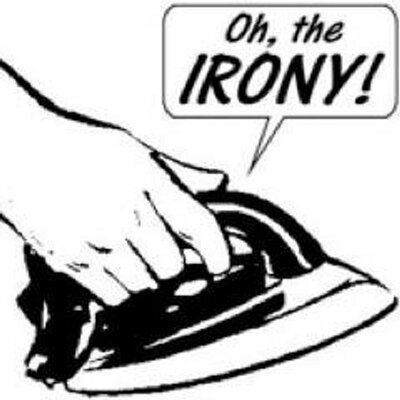

Ideal vs. Practicality
In both of the chapters that my group read it seemed that Dr. Wirzba has been dealing in ideal situations and not talking about any issues that could arise from the plans he puts forth. Of course most people who put forth ideas give the ideal, but perhaps with a little less irony. The irony comes after spending most of chapter one telling us how we have lost our way and how we should change and then saying that we are turning to professionals and others to tell us what to think, what to do, and how to live. What is he then?
Now on to More Serious Things
Let me be perfectly clear. This irony does not invalidate what Dr. Wirzba has to say, not at all. He has some good things to say and his base ideas are really good one.
On paper.
Wirzba suffers from the same thing that almost every writer who discusses philosophy or economic theory suffers from. Idealism. We love to deal with ideals and try and tell our side like its the best one and won't have any problems whatsoever. Wirzba has a less sever case of idealism than most as he acknowledges the issues with his ideology and the benefits of his 'opponents.' For instance, unlike some authors we have read that have written on agrarian ideology he admits that not all of our food (maybe even most of it) will still need to be store-bought but that growing some of our food will help us connect more with it. Which is completely true. The salsa we make with the peppers grown on our porch is tastes better to us because we grew it and we made it in our own home. However we cannot take care of our own cow for milk so we need to buy it. Wirzba appears to me to be more open to compromise than many of the others we have read. I think that if someone could show Wirzba that they are living a Sabbath lifestyle within the current system he would be interested in hearing how they compromised and pulled it off.
Decline of Delight?
The beginning of chapter five is all about how our entertainment industry today is removing the delight from our everyday lives. I have to disagree with him because I'm not sure if we can say this is a new phenomenon its been going on since humans could talk. We've always told stories about fantastical worlds and have always imagined new things. Why? Its not because we don't believe that the Earth is ugly or can't delight in it but because sometimes we want something new and different. Lets look at it another way, you can't eat fried chicken for every meal and not get tired of it. That doesn't mean you all of a sudden hate fried chicken and it may even be your favorite meal you simply want something different every now and then. Its why people travel to different places, when you see the same thing every day you get kinda numb to its grandeur. That doesn't mean its not there and you don't think it's beautiful you just don't think about it all the time. One could argue, and Wirzba does, that we should always be thinking about how beautiful our surroundings are because it was created by God. However, that's not really very practical because we can't constantly be marveling at something and function in every day society. This is one of the symptoms of Wirzba's idealism. We physically CAN'T do some of the things he wants us to.
Success...or Nah?
The rest of chapter five makes the case that our thirst for success is distancing ourselves from God and that it is one of the major factors causing the breakdown of our society. Our drive for success is driving our families apart and destroying our environment. Or is it? We didn't destroy our environment on purpose we did it because that was the only way we could go about it. Once we found out what we were doing it was corporations who lead the fight to heal the environment. Maybe not the same companies that were the ones responsible for the destruction in the first place but companies nonetheless. In fact environmentalism is big business and is projected to expand to nearly 4.5 trillion dollars by 2020, http://cleantechnica.com/2012/09/17/global-cleantech-market-expected-to-expand-to-e4-trillion-by-2020s-germany-to-capitalize/. This type of growth doesn't come without a thirst for success. So maybe it is destroying our environment, but it's also saving it. It seems to me that Dr. Wirzba is mistaking the means for the end. Its not the want for success that is destroying our environment, driving a wedge between our families, and generally leading to the disintegration of our society but rather why we want to succeed. Many people don't try to succeed to do a good job or to create something great but do get a lot of money. This is where we begin to see a lot of what Wirzba is describing. When people focus on nothing but getting more stuff they start to not care about people or anything else. When people focus on succeeding because they feel fulfilled when they create something great or do a good job we see people who care about the environment and other people. For instance Bill Gates, the richest man in the world, gives away the net worth of most companies to AIDs research every year. Why can he do this? Because he had the drive to succeed but didn't make getting money the only thing he cared about. He succeeded, made money, and cares about people. We don't need to tell people to stop trying to get to the "top of the pyramid" or that working hard to gain wealth is bad. We need to tell them that it shouldn't be what our entire life is all about and to not forget that many times our success hinges on cooperating with other people. That our relationships with other people is what gives us the ability to deal with the stress that comes from trying to be successful.
Monday, October 12, 2015
No Turning Back
In our readings in the past few weeks we have read about how land should be more about place rather than price and that putting price on land somehow devalues it's inherent use. Does monetary value and sentimental value need to be two mutually exclusive things? No. Land is priced based on its value to the general man but certain sentimental aspects can, and do, affect the price. Take an old house of example if something of import happened in that house and plot of land the price goes up. If someone is reluctant to sell their farm because it has been in the family for a long time the price goes up (farmland doesn't come up for sale very often so you can charge a lot for it.) Land value reflects a great many things and not just the value it has for use. The reason we monetize land (and anything really) isn't because we are greedy or no longer see it as important it's because its an easy way to trade. What if we didn't see land as something to be bought and sold with money but rather traded for? That's well and good until my acre of farmland is worth one and a half cows to you.
However many of the authors we have read seem to want land to be passed down from father to son and mother to daughter. Let's look back to history where that system was prevalent the feudal ages. Back then very few people owned the majority of the land (sound familiar?) and anyone who didn't own land couldn't hope to acquire any unless they somehow married into a family with land. The gap between the haves and the have-nots was astronomical and could not hope to be closed. But when we decided that people shouldn't only be able to acquire land through inheritance and maybe purchase some from someone who has too much to work by themselves we see the gap shrink. Now almost anyone who wants to (e.g. the organic farmer who came to our class) can buy some land if they are willing to risk it. People have choice and can begin to farm however they please not how the landed gentry tell them to. Why would we want to go to a system with less choice and really more divisiveness? One people fought against so long ago? We can say that maybe we would do it better and maybe our version wouldn't be so bad and that we have learned from past mistakes. We can say maybe sometimes taking a step back is the best way forward.
Not this time. We cannot take an old economic system and make it work for mainstream society because our values have changed. We want to be connected to EVERYONE in the entire world not just our small community. What about the Amish, we ask, they make it work. The Amish are the exception, not the rule. They are a small, dedicated group who started from that view point and that perspective and there's nothing wrong with that. We are not. We started from the perspective of Mac computers and Starbucks. We can't simply give those things up because we don't want to. Most of us would say that it'd be cool to live more simply but five minutes later we're back to posting on our blogs and tweeting. We have gone too far down the rabbit hole of technology and can't get back out now.
There's nothing wrong with that either. Sure our want for tech has caused most of our problems but they are fixable. Not by going backwards or thinking about how people did things a thousand years ago but looking for new, better, greener technology that will help us fix the damage done and prevent future damage. We need new, greener ways of producing electricity not to do away with it. We need new better, greener ways of farming, not going back to the Amish way of life that could not hope to support our huge population.
Face it. We NEED factory farms. We NEED GMOs and huge farms that can produces millions of bushels of corn. We NEED nuclear and solar power plants to produce the electricity we use everyday. Most of us could not survive without these things. How many people in America today can start a fire from nothing? Hunt, kill, and gut a deer? Tell at a glance which plants are safe and which are poisonous? We can learn. From what? A book printed on a industrial sized printing press? Or maybe from a website on our Macs? We can't go back now. We would like to sure because it would be much easier than trying to find new ways of doing things. They're already there and they worked back then with different people and in a different time but we could probably make it work. We would only need to change it a little bit to make it work for us right? Perhaps, but how will we fix the problems that this system brings with it? By going back even further? Or maybe we will go back to the current system because those problems are fixed and we forgot the ones we have now. The reason we have our current system is because we saw problems with the old ways and fixed them. In doing so we created new problems however and now we will need yet another new system to fix these problems. Then another one and another one. Each time improving upon what came before. This way we are always moving forward increasing yields and decreasing our impact on the Earth.
There is no going back. We can't simply trade our current problems with the old problems and tell ourselves that everything is better. It's not better and it's not worse, only different.

However many of the authors we have read seem to want land to be passed down from father to son and mother to daughter. Let's look back to history where that system was prevalent the feudal ages. Back then very few people owned the majority of the land (sound familiar?) and anyone who didn't own land couldn't hope to acquire any unless they somehow married into a family with land. The gap between the haves and the have-nots was astronomical and could not hope to be closed. But when we decided that people shouldn't only be able to acquire land through inheritance and maybe purchase some from someone who has too much to work by themselves we see the gap shrink. Now almost anyone who wants to (e.g. the organic farmer who came to our class) can buy some land if they are willing to risk it. People have choice and can begin to farm however they please not how the landed gentry tell them to. Why would we want to go to a system with less choice and really more divisiveness? One people fought against so long ago? We can say that maybe we would do it better and maybe our version wouldn't be so bad and that we have learned from past mistakes. We can say maybe sometimes taking a step back is the best way forward.
Not this time. We cannot take an old economic system and make it work for mainstream society because our values have changed. We want to be connected to EVERYONE in the entire world not just our small community. What about the Amish, we ask, they make it work. The Amish are the exception, not the rule. They are a small, dedicated group who started from that view point and that perspective and there's nothing wrong with that. We are not. We started from the perspective of Mac computers and Starbucks. We can't simply give those things up because we don't want to. Most of us would say that it'd be cool to live more simply but five minutes later we're back to posting on our blogs and tweeting. We have gone too far down the rabbit hole of technology and can't get back out now.
There's nothing wrong with that either. Sure our want for tech has caused most of our problems but they are fixable. Not by going backwards or thinking about how people did things a thousand years ago but looking for new, better, greener technology that will help us fix the damage done and prevent future damage. We need new, greener ways of producing electricity not to do away with it. We need new better, greener ways of farming, not going back to the Amish way of life that could not hope to support our huge population.
Face it. We NEED factory farms. We NEED GMOs and huge farms that can produces millions of bushels of corn. We NEED nuclear and solar power plants to produce the electricity we use everyday. Most of us could not survive without these things. How many people in America today can start a fire from nothing? Hunt, kill, and gut a deer? Tell at a glance which plants are safe and which are poisonous? We can learn. From what? A book printed on a industrial sized printing press? Or maybe from a website on our Macs? We can't go back now. We would like to sure because it would be much easier than trying to find new ways of doing things. They're already there and they worked back then with different people and in a different time but we could probably make it work. We would only need to change it a little bit to make it work for us right? Perhaps, but how will we fix the problems that this system brings with it? By going back even further? Or maybe we will go back to the current system because those problems are fixed and we forgot the ones we have now. The reason we have our current system is because we saw problems with the old ways and fixed them. In doing so we created new problems however and now we will need yet another new system to fix these problems. Then another one and another one. Each time improving upon what came before. This way we are always moving forward increasing yields and decreasing our impact on the Earth.
There is no going back. We can't simply trade our current problems with the old problems and tell ourselves that everything is better. It's not better and it's not worse, only different.
Sunday, October 4, 2015
The Root of All Evil May be Found in the Roots
The Root of All Evil May be found in the Roots.
In chapter 6 Davis describes all of
the negative (and only negative) consequences of industrialized agriculture which
range from all war to the Oklahoma City bombing. They also give some pretty
startling stats about the productivity of small farms vs. industrial farms
which are pretty hard to believe, 200-1000% more productive? Yeah okay. I’m
going to break down each claim and see how well it stands up to some scrutiny. TO GOOGLE! AWAY!
Militarized Entities (sooooo....everyone?)
Let’s start with the idea that
militarized entities are more concerned with the political sovereignty of land
rather than the care of land. No dip Sherlock. Of course the military is more
concerned with the control of land rather than the care of it. That’s the
military’s job just like the care of land is the farmer’s job. This is a
nonpoint, it neither helps nor harms their argument and is technically true.
Sure you can say that “militarized entities” refers to nations and not the
military but the same can be said about that as well. The whole point of
governments and militaries is to protect the land so it can be cared for. Small
farming communities could not defend themselves against invasions or large
armies so we form governments to create large armies to protect us. That’s
their job, just like it’s the farmer’s job to care for that protected land.
Otherwise anyone who could get a group of 1000 people would be able to take
your land away from you. Thus making it impossible for a self-contained
community like Shipshewana to exist in the first place.
War...What is it Good for?
Keeping with the military theme we
move on to the next assertion they make, that all war could be avoided if
everyone were agrarian. How to even begin? Wars are fought for many reasons and
not solely for the control of land. They are fought for religious reasons, economic
reasons (like access to the sea) and even for ideological reason (unification
of all Germanic speaking people). How can the agrarian system prevent war? Well
the quote from the chapter states that it would present less cause for war,
more nations would be self-sufficient causing less fighting over resources.
This implies that EVERY war EVER fought was fought SOLELY for resources. Yes
resources are almost always involved (oil in the Middle East) but often this is
not the sole reason. We go to war because other nations ask for help, because
we are attacked, and because a certain dictator is violating international
human rights laws and the UN asks (forces) us to. Even if we consider resources
the root of every war ever fought agrarian ideals don’t account for it. Most
recent wars were not fought over farmland when they were fought purely for
resources. They were fought over oil fields, mines, refineries, and ports. This
was the motivation for Iraq to invade Kuwait and was the reason 34 nations
needed to protect it. We needed oil and our source was being threatened. If we,
as the author states, become more independent internationally we wouldn’t have
taken action. Kuwait would be a part of Iraq and many nations who do not have a
lot of oil within their borders would essentially be controlled by Iraq. We can’t
just ignore the rest of the world because we can supply all of our own needs,
we have more oil, more fertile land, and more natural gas than most of the world,
because many places in the world simply cannot. We in America have the luxury
of living in a nation that covers more than 3.8 million square miles and has
every biome on Earth, from jungles to tundra to plains to deserts. We have
unequalled access to a unmatched variety of resources within our borders.
Sometimes we tend to forget that the rest of the world is not like this and
must look outside of themselves for these resources, sometimes to us. We cannot
simply say “every nation should become more self-efficient” and expect all
international conflict to disappear. It won’t. This issue is so much bigger
than any agricultural system.
Math is Complicated...
Let’s move on to some of the more
dubious, c’mon 1000%?, stats given by the author. I did a google search for “small
farms more productive” and every source on the front page was an agrarian
website. Now this in of itself doesn’t mean that this stat is wrong but it is
telling that the authors seem to constantly reference themselves. I repeated
the search on Google Scholar and got much the same result with titles like “the
Journal of Organic Farming” etc. However I came across another article titled Mis-specification in Farm Productivity
Analysis that contends that the idea that small farms are more productive
than large ones is because the researchers fail to control for farmland quality.
It shows that the productivity difference shrinks, and in some cases
disappears, when the quality of farmland is controlled for (http://www.jstor.org/stable/2663254?seq=1#page_scan_tab_contents).
Since I don’t own the book (and since it’s, somewhat ironically, 30-40$ on
Amazon I won’t any time soon) I cannot check out the referenced used in the actual
chapter. I point this out to show that this productivity is not the consensus
of every researcher and it may be a misrepresentation of statistics. 1000% more
anything is difficult to believe and deserves scrutiny.
Divide and Conquer...or Not.
After this the author goes on to
discuss the idea that large farms don’t take care of their land. …Okay? So large
farms don’t want to mitigate their impact on the land so they can continue to
farm and profit? They seem to blame the farmer’s themselves, seem to not sure
if they actually are, and not the sheer size of their farms. I would like to
know how, exactly, dividing farmland into many smaller farms without
eliminating acres of farmland would eliminate the environmental impact.
Eliminating the use of synthetic chemical herbicides, pesticides, GMOs, and
fertilizers would go towards that goal but that isn’t necessarily an agrarian
ideal. Many industrial farms are moving towards this system now that technology
is being developed to let them do this (this is purely an observation of most
of the farmers around my area when discussing new farming techniques). One of
the largest environmental impacts of large scale farming is the harm to the
water table. Dividing a large industrial farm into many smaller farms ran by
small families isn’t going to remove that harm. It may seem to, because each
farmer will be responsible for less harm. Let’s look at it another way, if
every person contributes 1000 lbs of carbon dioxide daily from driving a car
because they each own a single car and that’s how much a single car contributes
daily. Now let’s say we give ten people that car and each drives it the same
amount and that car still produces the same amount of carbon dioxide. Now each
person contributes 100lbs a day instead of 1000. It seems like we are reducing
our impact on the earth but really we aren’t. The same applies to dividing up
farmland, it will still draw the same amount of water from the water table
because the amount of farmland was not reduced.
Let's Wrap it up Shall We?
This chapter isn’t outright wrong
in what they say, the reduction on international dependence on large farms may
actually reduce the amount of war, and perhaps smaller farms would pollute
less. They simply take it too far, you cannot claim that there would be no more
war or that pollution would be greatly reduced if everyone was agrarian because
that grossly oversimplifies the issue. Chapter 6 overextends itself into realms
that are not necessarily greatly affected by farming ideologies. One could
claim that agrarian thought extends far beyond simple farming, and it does, but
I would counter that extrapolating it to international relations, war, and beyond
is not valid. The agrarian ideology stresses smaller, interdependent
communities rather than a national and international scale, keeping the wealth
in the small farming communities rather than sending it out into the world. Many
agrarians would contend that large, industrial farms put too much wealth in the
hands of too few. However these farms provide the raw materials required to
fuel our other industries, cotton for clothes, milk for ice cream, and many
others. These industries then make it possible for artisans, politicians,
teacher, scientists, and philosophers to exist in the large numbers they do
today. Our universities would be microscopic compared to what we have today,
most people would have no more than an 8th grade education.
Industrial farming has led to many problems and negative consequences, which
are being worked on, but it has also led to many positives and have enriched
our lives tremendously at the same time. It seems to me that we, in this class
and society at large, focus too much on the negatives and ignore the positives.
Either that or we focus only on the positives (Fair Oaks) and ignore the
negatives completely. Most of the time this leads us to take a stance on one
side or the other and hinders meaningful discussion on this issue. The answer
isn’t dividing up all farmland and doing away with industrial farming and it’s
not putting control of farming into the hands of only a few people. It’s somewhere
in the middle.
 |
| It takes one of these to solve problems. |
Sunday, September 27, 2015
The old ways is the best ways…or is it?
The two articles we read this week seemed to not really like the idea that some people now believe that Proverbs may not be the end all of wisdom when it comes to farming. The specific proverb they quote actually pretty much describes exactly what modern day farmers do just on a giant scale. I’m not sure how extensive the writer of this article’s experience with farmers and farming but most of what they say we should do, they do. One of their biggest points is managing land by planting different crops or not planting crops in that particular field at all. Most successful farmers do this every year, in fact most farmers that are in my area leave forests or even plant them to retain the soil quality. They describe conforming to the contours of the land, most farmers do this plowing their fields according to the hills and valleys of their land. Basically they focus on the negative parts of agriculture, and really mostly the parts that aren’t ecological, and ignore the positives. The author describes how our current system places the control of much of our land in the hands of a small group of people and how it favors profits over anything else. These complaints have little to do with ecology or pollution, it seems that they see a system that they do not like for political reasons and attempt to use ecology as a reason to change it. The reason this is a problem is mostly due to the fact that having an economic issue with our system is completely valid but they don’t use their actual complaints as reasons we should change our system. Making the argument that consolidating wealth is detrimental to most people and our overall society is a completely valid.
There are also many ideas that simply don’t work with our society (e.g. we shouldn’t sell land or houses). These ideals come from an ancient culture that had values much different than our own. One idea that the author criticized was the practice of buying and selling land instead of passing it to the next of kin. The ability to buy and sell land, and the preference to do so, actually helps distribute wealth as there are very few individuals with enough money to purchase an entire farm. This results in the seller parceling out land which more people are able to purchase and subsequently farm however they please, which is exactly what the author wants. It’s when farmers pass the farm down through their family that problems with consolidated wealth occur (i.e the landed gentry of the Middle Ages). Land as a commodity allows both individuals to own small plots of land to produce higher quality and more niche foods, and large corporations to run factory farms to produce more affordable staple foods for the masses. Going back to the old ways of doing things may fix some of the problems our modern day society has created, but they’ll bring back the problems that our modern day society fixed. Sometimes you have to take a step back to move forward but this time going backward isn’t the way to move forward.
Sunday, September 20, 2015
Freedom of Choice
In Money God and Greed Jay W. Richards makes the case that our
consumerist culture is not the product of our economic system but rather our
own personal choices. He bases this idea on the Biblical sin of gluttony (one
of the seven deadly sins prominently displayed in the movie Seven) as the true source of consumerism
and also tells us that there is no clear criteria that defines gluttony and it
varies from person to person and that it’s not only a problem for the rich.
Basically anyone can make the choice to spend their money on frivolous things
they can’t really afford but nobody really makes them. Sure they’re being
tempted by ads and product placement but in the end you make your own decisions
and you must own up to them. We’re also not talking about buying an extra candy
bar at the grocery store but rather living in government assisted housing while
driving a Dodge Challenger. It’s not having a lot of money or a lot of
expensive stuff but living above your means, taking loans and going into debt
that marks the glutton. Buying a new iPhone just to have a brand new iPhone could
be a sign of gluttony while buying a new iPhone when all of your devices aren’t
compatible anymore probably isn’t. Finding a balance with our money is the key
to not being gluttonous and participating in the consumerist culture.
While capitalism is the enabler of
the consumerist culture there are also pros to this system. Capitalism creates
competition which forces companies to make better quality products and drives
the prices down. As a specific example let’s look at the taxi v. Uber
controversy see the taxi services in most cities haven’t innovated or changed
in the last fifty years and now Uber has come along and offered a superior, and
cheaper, product. This has angered the taxi drivers because they are losing
business but still don’t change their product sounding the death knell for
their industry. Is this necessarily a bad thing? The (semi) free market is deciding
who survives and who dies out. We have chosen which company to support with our
money and which to let go by the wayside.
But what about the taxi drivers?
Shouldn’t they get some sort of compensation for their lost jobs? Yes. Should
we limit Uber’s right to expand and hire new drivers? No. See here in the U.S.
we don’t live in a “pure capitalism” rather we have attempted to take the best
parts of capitalism (better products) and socialism (pick a social program) and
fused them. Look at programs like social security and welfare that are designed
to help people who need it, find them a job, and get them on their feet. These
programs help protect the people while the marketplace helps protect
businesses, together they provide for everyone (nearly).
What’s the point?
The hybrid we have created here in
the U.S. isn’t perfect and we tend to disagree about how it could be improved,
but the fact remains that it does it’s best to protect both business and
everyday people. It’s not perfect but we have been able to make it work most of
the time.
Sunday, September 13, 2015
SCREW YOU HIPPIE


One
of the ways that we do this is to create an enemy out of a group of people who
aren’t really enemies of our cause. For instance many environmentalists like to
get angry with oil companies because they believe they profit directly from the
destruction of the environment and constantly block new research into alternative
fuel sources. They site people who begin to develop new fuel sources and then
never hear about it again. Basically the news in this country love to talk
about something for all of five minutes then never revisit it again. Most oil
companies are working very hard at finding new fuel sources so they can profit
and they love to invest in independent researchers and buy their idea so they can
pump millions into it and develop it much more quickly than any one person can
do on their own. But that’s not news that sells so we just get to hear about
how terrible they are (any oil spill ever). Creating a scapegoat like this only
makes it more difficult to get anything done and slows development to a crawl.
Andy
Catlett
What to say about Andy Catlett? It’s mostly about how great
the old ways were and how we shouldn’t leave them behind. Technology should definitely
not go back to the way it was and some of our ideals do not carry over (read
racism) but certain positive aspects of our society have, sort of, been lost. A
large part of our social interaction is now over the internet or some other
device which some say makes us antisocial. But they seem to forget how it used
to be…


Technology
isn’t really making us any more or any less antisocial than we used to be it’s
simply changing the ways we socialize. Now instead of taking my controller and
memory card over to a friend’s house we just get on the same game at our own
houses. Who’s to say which form is better? They both have their advantages and
disadvantages, it’s really up to everyone’s personal preference. Now let’s look
at a more abstract idea the hurry that we see in society. Many people believe
that we are more stressed nowadays than we ever have been in the past. Wendell
Berry used the contrast between the horse drawn carriage vs the automobile as an
example of how we are more in a hurry than we have been in the past. Many
people would say the amount we work now makes us more stressed than before and
a great example would be my family. My dad has worked many a long hour and
deals with a lot of stress. Certain people (I like these ones) would say that
40-50 years ago he wouldn’t have had to do that and would have been less
stressed and we should go back to that. Then I tell them that 40-50 years ago
my grandfather worked up to 4 jobs simultaneously to provide for the same size
family my dad has (wife and 2 kids). Technology hasn’t really changed a lot of
WHAT we do it’s changed HOW we do it.
Speaking
of retro stuff….

Thanks for reading
Sunday, September 6, 2015
Stewardship
Stewardship
Christians in this world need to take control over Creation and use it in a way that preserves it for future generations. This doesn't mean we need to put plants and animals above humans. We need to find a good balance between being able to provide for our own needs and providing the needs for the world's animals. For instance if people in Brazil need to cut down part of the rain forest to plant farms and feed their growing population we need to let them. Here in America we think of the rain forest as an exotic place that needs to be protected because we don't have any where we live. But to the people like who live there its just normal trees and plants that they see every day. It's like an oak tree or a pine tree to us, nobody cares if we clear a small forest of oak, cedar, and pine trees nobody really cares and just accepts it. It's only when we hear about a place like Brazil clearing a forest we get up in arms and try to stop it. Then we wonder why it is people in places like Brazil and Africa are facing starvation. We need to allow people to develop their country and provide for their people.
With that said we cannot simply allow corrupt governments to destroy the land and strip it of resources for their own gains and not give anything to their citizens like in the article we read for class "The Next Breadbasket" where a Chinese company takes over farming operations in Mozambique taking it away from citizens of that nation. The creation of those farms doesn't help the local populace and is not the correct way to handle the development of farmland.
Dominate Creation
When a farmer has a diary cow they take care of it and feed it keeping it healthy enough to produce the milk they need to make a living but if the cow is sick and their son is sick they don't let their son suffer and die. The farmer always chooses his fellow human beings over his cows. This is the manner in which we should care for the world. We need to understand that caring for our world is vital for it to produce the things we need to survive like food and resources but we should not choose it's health over that of fellow humans.

It didn't matter that he had no idea he killed a lion with a name, his real crime, or that it was being tracked by the Oxford University or that a bunch of upper middle class Americans would get mad at him. All that mattered was that he did something some people didn't really like. Doesn't matter that most people in Africa didn't really care or thought he had simply removed a common pest. They see lions as potential threats and many villages pay trophy hunters to kill lions who are killing their livestock and taking their livelihoods away. They see lions in the same way we see coyotes that there are so many of them causing so many problems that it doesn't really matter if we kill one or two or three or four who are killing our chickens (or goats). Coyotes in the United States could go extinct and nobody would care, they're not exotic or cool enough for us to care here in the USA. In fact many radical proponents of conservation believe that even the lions who are endangering entire villages should be left alone and those villages should just deal with it.
But we as Christians cannot allow ourselves to be dominated by any part of Creation, including the cool exotic ones we don't see every day. We have to choose the well being of humans over the well being of animals. My brother made the point when this was all happening that "if they came up with a way of feeding every person on the continent of Africa for the rest of time but as a result lions would go extinct, these people would pick the lions."
(The Zimbabwe perspective http://www.reuters.com/article/2015/07/30/us-zimbabwe-wildlife-lion-idUSKCN0Q41VB2015073)
Character+Food
Most of us know the saying "you are what you eat" which originally referred to the effect that various foods had on your body. Nowadays some people have started using this saying with the intent of attaching a type of morality to the diet people choose. For instance some people (mostly on vindictive internet forums) who are vegetarians, vegans or someone who only eats organic foods feel that they are morally superior to people who eat meat, GMOs, and anything that does not fall into their specific diet. This is a mistake and your choice of food should not factor into how good or bad a person is (unless they eat people). Of course there are some exceptions like if someone hoards all of the food while everyone else is starving or steals everyone else's food and I mean actually does this not this non-issue where the developed world has more than the developing or undeveloped world. We produce most of the food we eat and truth be told it would be incredibly difficult for us to feed people half a world away.
Subscribe to:
Posts (Atom)